Sunday, March 16, 2014

Silhouettes and Lace-Kara Walker & Carole Caroompas

 
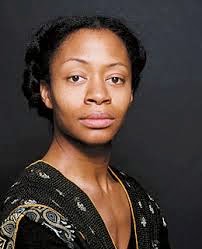
Kara Walker
American (born November 26, 1969 in Stockton, California)
- Atlanta College of Art -BA 1991, Rhode Island School of Design -MFA 1994
-Larry Walker her father is an educated artist and professor
-Walker learned to love art watching her father draw in his garage studio.
-She was 2 1/2-3 years old when she decided to become an artist.
-Walker is known for her room-size silhouettes addressing the horror and violence of slavery and racism. She emphasizes the reality of the experiences being sent throughout history and how easy it is to commit atrocities.  The images are based on 19th century stereotypes and part of her own hand designs.  "Backhanded cycle at bay..." Her art indicates that slavery and the horror is still alive enough for someone like her to make art about it.


Carole Caroompas
American (born November 14, 1946, Oregon City, OR)
MFA University of Southern California, 1971, BA, California State University, Fullerton, l968
-As an English major in her early college career, Caroompas' paintings and drawings are influenced by literature.  Caroompas discusses her work as belonging to the "Post-Modern Nostalgic" movement. The images in her work consist of personal experiences, family imagery, and "baby-boomer" imageries such as 1960's comedian, (political crusader for free speech), Lenny Bruce. 
-The lace component in her current work creates an additional layer in her work.  The lace provides openings into the past as well as shadows of memory. The paintings and drawings also include commentary on human sexuality, women's rights, gay rights, and the manipulation of our psyche by television and the movies.
-The text found on the drawings is also an influence of her love of literature and poetry and music.
Uncle Lenny-Gay Men
Uncle Lenny and Lesbians
close up of Uncle Lenny and Lesbians
Uncle Lenny Stand up close up


"I won't say ours was a tough school, but we had our own coroner.  We used to write essays like: What I'm going to be if I grow up."  Lenny Bruce
 
"A lot of people say to me, "Why did you kill Christ? I dunno, it was one of those parties, got out of hand, you know." Lenny Bruce
 
"If Jesus had been killed twenty years ago, Catholic school children would be wearing little electric chairs around their necks instead of crosses. Lenny Bruce
 
 
Carole Caroompas and Sandra Vista at Caroompas' solo exhibition at Western Projects 2007
 
Carole Caroompas record album cover
 
1. How does the smoke in front of Caroompas' portrait compare with lace surrounding the witch, (Endora from "Bewitched" TV show)in Uncle Lenny and the Lesbians? (What does it mean when the word "dike is in the vernacular"? (vernacular-part of everyday language)


2. Kara Walker states that her style of artwork is evidence of the horrors and atrocities of slavery and racism.  Discuss what you think she means by this statement.  How does the silhouette of the person with head manacle reflect her thesis.


 3. Why do you think that Walker and Caroompas use black paper as their primary drawing surface? (think about what "nostalgia" looks like to them-nostalgia by definition means yearning for the return of past circumstances, events-something that evokes an emotion, such as a book, movie, painting)


Thursday, January 16, 2014

Japanese Emblem Design Card for Teacher


JAPANESE EMBLEM CARD-NARRATIVE ESSAY
300-500 WORDS (100-150 PTS (PLUS)) TYPEWRITTEN
-Your essay can be made up of 3-5 paragraphs
(download on edmodo)

1. Describe the Japanese emblem that you have chosen and why it appealed to you.
2. Discuss/describe the teacher you have chosen and their qualities that interest you about the teacher (ie: virtues: honesty, integrity/humor/intelligence/kindness)
3. What are some of the reasons that you chose the teacher/how did the qualities that you listed above validate your choice?
4. What surprises occurred during the presentation of the card to you teacher? What were the unexpected events? How will your relationship change with your teacher? What are the benefits of presenting your teacher with the card?
5. What did you learn about yourself during the designing of the card? How was writing the haiku an added creative experience to your work?
6. What are the benefits of this kind of act of kindness and consideration? (how much has your heart "grown" during this process?)

JAPANESE EMBLEMS:
-DECORATE ATTIRE/IDENTIFY INDIVIDUAL OR FAMILY SIMILAR TO WESTERN FAMILY CRESTS
-EMBLEMS ALSO IDENTIFY CLANS AND FLAGS
-RANKS OF SOCIO-ECONOMICS LEVELS
-IMPROPER TO USE OTHERS EMBLEMS
-GEISHA'S EMBLEMS USUALLY USE CONTAIN A FAN


EXERPTS OF STUDENTS' ESSAYS REGARDING THEIR EXPERIENCES DURING THE PROCESS OF DESIGNING A CARD FOR ONE OF THEIR TEACHERS.


Ms. Juanita Granados- Spanish Instructor Libra Academy, Huntington Park, CA


Mr. Jaime Jimenez, Spanish Instructor, Huntington Park, CA, Libra Academy


Ms.Mi Chi Pham, Math Instructor, Libra Academy, Huntington Park, CA


Ms. Sandra Vista, Art Instructor, Libra Academy, Huntington Park, CA


The Yin and the Yang
by Salvador Ponce
     The reaction that I saw on Ms. Davenport's face was a huge surprise to me.  The reason why it was so surprising to me was because I do many foolish acts in her class, which made her angry.  In the small letter I dedicated to her, I simply wrote that I was going to try hard not to get distracted or make any more foolish acts.
     In my project there was one line that when she read it she smiled right away.  The line said: "I just wanted to remind you that in good there is always bad and in bad there is always good."  This is the reason why I chose the yin yang symbol because when I researched it and that is what it meant.
When she had finished reading she said that she had been wanting a picture or drawing of the yin yang symbol because of what it meant...


Haiku Card
by Alejandro Moreno
...The picture I chose was a dragon inside a flower.  I chose that picture because it was small, easy and had good meaning.  It could mean things like something very big trapped inside something very small.  My haiku was about that.  A dragon could be trapped in something as small as a flower.  I colored the flower pedals yellow to symbolize a regular flower, and the dragon blue to symbolize the sky.  The picture connected to me because I see many people held down by something smaller than them when they are stronger.
      I gave my card to Mr. Ring because he is very nice and I felt the picture was mostly connected to him.  Mr. Ring is a very hardworking person.  He comes to work everyday and exhausts himself to teach his students.  I need to do acts of kindness because people like Mr. Ring do so much to teach their students how to do math.  He also has after school programs to help students who need help or don't understand.  The picture fits him because he might get held down by all the work that he does.


Narrative Essay
by Sebastian Beltran
...What I learned about myself is that I really like to make stuff that make other people feel happy.  It also made me realize that I like to make creative designs.  Writing the haiku was an added creative experience to my work and made it look like it took more time and effort. ...The benefits of this act of kindness and consideration has made me feel more appreciative for the people at Linda Marquez for their work and for what they do. My heart has grown very much during this process because now I know that thanking people can be really helpful and change my relationship with that person in a good way.


Wednesday, November 20, 2013

Chinese Paper Cuts in Contemporary Art-The Alchemy from creating the paper cuts


Year of the Snake paper cut out


Sonia Romero- Los Angeles based artist


"Sacred Heart"- Sonia Romero


Leigh Salgado- Los Angeles based artist

 Leigh Salgado- gloves


Leigh Salgado- Lingerie


Chinese Paper-Cuts

-Paper-cut is a distinctive Chinese handicraft. It originated in the 6th century when women used gold and silver foil cuttings to decorate their hair at the temples.  Men used them for sacred rituals. Now they are used for festivals to decorate windows, gates etc.

-The main cutting tools are scissors or engraving knives.  In contemporary art the e-xacto knive is used.  Additionally, lasers are used today to expediate the art form.

-Newlyweds have red paper with "Xi" (happiness), for birthdays "Shou: represents longevity, a plump child cuddling a fish signifies that every year they will be abundant in wealth.
 
Paper Cutting and the use of paper as an art form is unfolding into a ubiquitous experience. With the use of recycled paper, more artists are motivated to use repurposed materials. Also the availability of new forms of paper materials, the need for more insulary and introspective art forms has contributed to various contemporary artists focusing on paper as an art medium.
 
This kind of labor intensive art forms allows for meditation and introspective.  These concepts can be attributed to Carl Jung's (psychiatrist l875-1961) concept of alchemy in art and the focus on the unconscious.
 
(Alchemy- transmutation, transformation, the ability to turn base metals into noble metals (gold, silver), the elixir of life (lapis) -Philosopher's stone - universal curative medicines (panacea)
 
Astrology, signs and symbols, parts of the body-chemistry
 
(ie: Chinese creation of black powder used for fireworks that turned into gun powder)
 
Leigh Salgado-youtube video "There's No Crying in Baseball"
 
How is the notion of alchemy a strong force in the creation of Salgado's paper cut pieces
 
1. "Getting your mind out of the way"-a direct path to the unconscious and the unknown to create artwork-non-verbal part of the brain-
 
`metaphors of baseball and art (baseball cut and dry-you are in or you are out-consistency  vs
  art -unknown
 
-shadows and dimensions- the importance of "shadows" in our existence
 
-time travel (using imagery from different time periods)
 
-masculine vs feminine (lingerie associated with men's desire vs. women's wardrobe and beauty and design)
 
-what is beauty


Wednesday, October 9, 2013

The Cheshire Cat as a Color Wheel


Illustrations by British illustrator and political cartoonist Sir John Tenniel (1820-1914 London)

Alice in Wonderland tells the story of a girl named Alice who falls down a rabbit hole into a fantasy world populated by unusual characters.

Anthropomorphic-creatures having human traits in animals, and forces of nature.  This trait is specially used in fables and children's stories to get the message across in a palatable way.

Personification-Giving an actual personality to an abstraction, animal, object

Hyperbole-exaggeration used to emphasize, or affect something-to exaggerate


Cheshire Cat Drawing as a Color Wheel and Dada Poem


"How fine you look when dressed in rage. Your enemies are fortunate your condition is not permanent. You're lucky too.  Red eyes suit so few." (directed to Alice)


primary colors


secondary colors

Drawing of a Cheshire Cat with primary and secondary colors

CHANCE POETRY (Dada Poetry-Dadaism) Early 1916 Zurich, Switzerland spreading to Berlin and later to New York. (Marcel Duchamp) 
-CREATE A POEM ALONG A PAINTING BASED ON THE WORDS FROM THE CONVERSATION WITH ALICE AND THE CHESHIRE CAT ABOUT "MADNESS".

THERE ARE 7 HEAVENLY VIRTUES IN THE CATHOLIC CATECHISM:

-Chastity: purity, knowledge, honesty, abstain from sexual conduct, practice courtly love, cleanliness (ant.: lust)

-Temperance-self-control, justice, honor, abstention, restraint, constant mindfulness, moderation, deffered gratification (ant.: gluttony-piggy)

-Clarity- will, generousity , benevolence, sacrifice, love with unlimited kindness, "infused with the soul" (ant:, greed)

-Diligence, persistence, effort, ethics, fortitude, not giving up ( ant: sloth,lazy)

-Patience-peace, mercy, sufferance, endurance through moderation, resolving conflicts peacefully,
(ant.: wrath, big hate)

-Kindness-satisfaction, loyalty, compassion, integrity, charity, friendship for its own sake, unselfish love, positive outlook (ant.: envy, jealousy)

-Humility-bravery, modesty, reverence, altruism, selflessness, giving respect, reverence for those that have wisdom, willing to take on difficult tasks graciously and to accept sacrifices that are involved.  Giving credit where credit is due. (ant.: pride)

Assignment:

Choose four (4) virtues that describe the Cheshire Cat.  These are positive attributes and back up your statements. (40 pts)


Monday, September 30, 2013

Complementary Colors-Van Gogh Post Impressionism/ Impressionism

 
1853-1890


Van Gogh Portraits and Chair


MONET- WATERLILIES


Monet's Haystacks (The colors are those he saw from the fluid in his eyes refracting the sun.  \)
"Mouches Volantes"-flying flies- refractive degrees with the eye's vitreous humour (thick fluid /gel that fills the eye) "Floaters" -spots, threads, cobweb fragments that appear with the eye's vitreous homour.  Changes occur with age and degeneration of the eye.


Monet's Waterlilies
 
 
MILLET -HAYSTACKS
 
 
MILLET- THE GLEANERS
 
MANET- LUNCHEON ON THE GRASS
 
MANET -LEMON


Impressionists artists opened the door to a new world of modern art.  The Post-Impressionists wanted to continue to stretch the boundaries.  The Post Impressionists began with a new group of artists that lasted between l885-l910.  They learned about using light, shadows and colors in their art from the Impressionists.  Their own ideas began by using new subjects, techniques, perspectives and shapes to express their thoughts and emotions in art. 


Impressionism began around l873 with artists like Monet, Degas, Cezanne and Morisot. Impressionism as a new generaton of artists began using lighter brush strokes, brighter colors and less attention to details, emphasis on landscapes and everyday life.   They were thought they eccentrics.
 
 
COMPLEMENTARY COLORS ARE COLORS ACROSS EACHOTHER FROM THE COLOR WHEEL.
 
PRIMARY COLORS: RED, BLUE, YELLOW
 
SECONDARY COLORS;  PURPLE, ORANGE, GREEN
 
 
COMPLEMENTARY; RED & GREEN,  ORANGE & BLUE,  YELLOW & PURPLE


Van Gogh 1889*
1.VAN GOGH'S SELF PORTRAIT- WHAT ARE SOME OF HIS THOUGHTS AS HE POSES FOR THIS PICTURE? IT WAS A SELF-PORTRAIT SO HE MUST HAVE USED A MIRROR TO PORTRAY HIMSELF. WHAT DO HIS BODY LANGUAGE TRANSFER ON THE CANVAS? (COLD WEATHER, ILLNESS,...)
 
 
PAUL GAUGIN -SELF PORTRAIT 1889
 
2. GAUGIN WAS A FRIEND OF VAN GOGH'S AND WORK WITH HIM UNDER THE REQUEST OF VAN GOGH'S BROTHER THEO.  WHAT ARE THE OBIVIOUS DIFFERENCES BETWEEN VAN GOGH'S PORTRAIT AND GAUGINS? (background information).  WHY DO YOU THINK GAUGIN HAS A PAINTING OF JESUS IN THE BACKGROUND?  THE PAINTING WAS PROBABLY ONE OF HIS OWN? WHAT DOES GAUGIN'S BODY LANGUAGE PORTRAY?
 
 
 MILLET'S HAYSTACKS 1873 (Realism)


MONET'S HAYSTACKS 1890's Impressionism
 
3. DISCUSS THE SIMILARITIES BETWEEN MILLET'S AND MONET'S HAYSTACKS. (FORM, COLOR, LIGHT SOURCE)
WHAT ARE SOME OF DIFFERENCES BETWEEN THE PAINTINGS? (content, mood, information being portrayed)